
Nicotine Withdrawal Timeline: Day by Day, Week by Week
"How long does nicotine withdrawal last?" is one of the first questions people ask when they quit vaping or smoking. The honest answer is that it varies, but there is a common pattern. Knowing it helps, because you can see the hard part coming and remind yourself it won't last.
First cravings, often within a few hours of your last puff.
Usually the peak: cravings, irritability, restlessness.
Still tough, but most people notice it easing.
Mood and sleep start to settle. Triggers still bite.
Physical symptoms mostly fade.
Occasional cravings, mostly from triggers.
The first hours
If you vaped often, you may feel the first craving within a few hours of your last puff. It's mostly habit at this point: your hand reaching for a vape that isn't there. Have your plan ready from the first hour: water, gum, something to do with your hands.
Days 1 to 3: the peak
For many people, the first three days are the hardest. Cravings come often and feel strong, and you may feel irritable, restless, anxious or unable to focus. Sleep can be off. This is when most people slip, so make these days as easy as possible: clear your schedule a bit, avoid drinking, and stay away from people who vape.
Each craving usually peaks and passes within a few minutes. You are never fighting a whole day, only the next few minutes.
Days 4 to 7: still hard, but turning
By the end of the first week, many people notice the intensity starting to drop. Cravings are still there, especially around triggers like waking up, coffee or stress, but they come a little less often. You might feel hungrier than usual. Keep easy snacks and water around.
Week 2: settling down
Mood and sleep usually begin to settle in the second week. Brain fog lifts. The cravings that are left are mostly tied to situations: the drive home, a night out, a stressful call. This is a good time to plan for your specific triggers. See vaping triggers.

Weeks 3 to 4: mostly through it
For most people, the physical side of withdrawal has largely faded by around a month. You may still get the odd strong craving out of nowhere. That's normal and it doesn't mean you're back at the start. Each one you get through makes the next one weaker.
Month 2 and beyond
Cravings become rare and short. The biggest risks now are "just one" moments: a party, a bad day, a friend offering. Decide in advance what you'll say and do. Remember that one puff tends to restart the craving cycle.
What can make withdrawal longer or shorter
- How much you vaped: high-strength liquids and all-day use often mean stronger withdrawal.
- Stress and sleep: a stressful period makes everything harder.
- Support: people, a plan and tools for cravings make a real difference.
- Nicotine replacement: patches or gum can soften symptoms. Ask a pharmacist or doctor.
Watch your progress add up
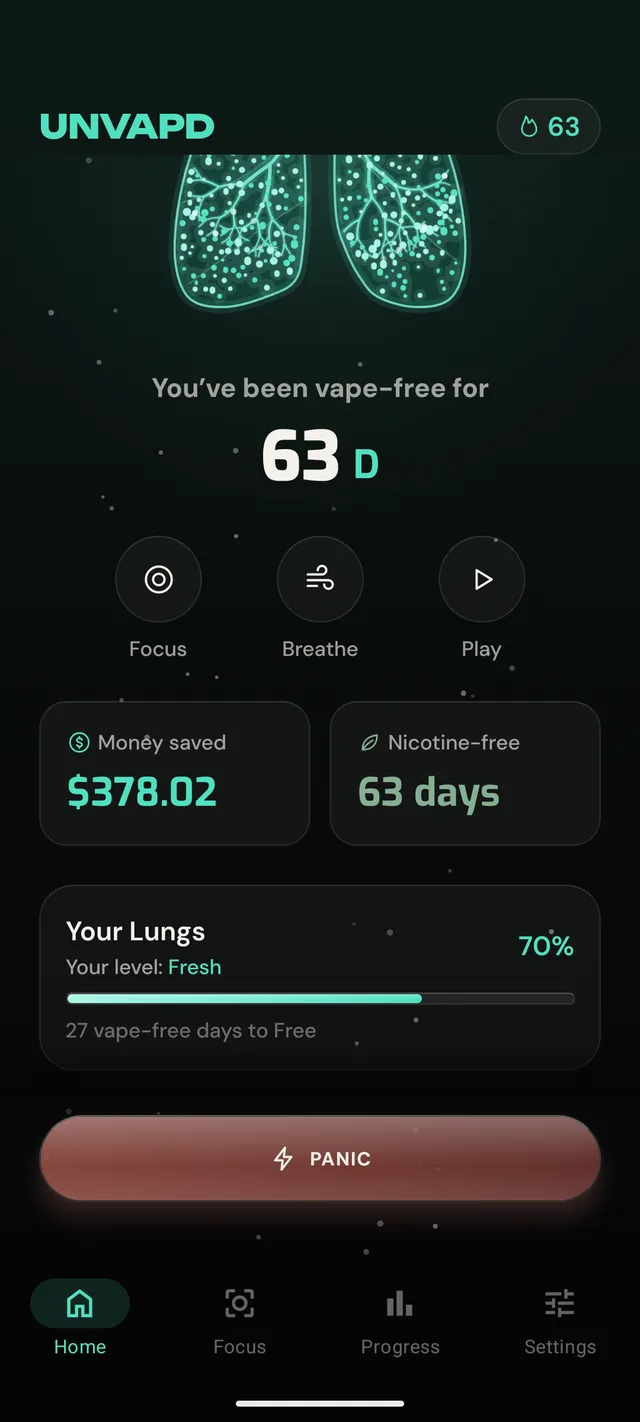
It's easier to get through day three when you can see days one and two behind you. Unvapd, the app we built to help people quit vaping, counts your vape-free days and the money you've kept, and lights up a picture of lungs as your streak grows, from Smoky to Free at 90 days.
Sources and further help
This article is general information, not medical advice. If you have health concerns, or want help with withdrawal or stop-smoking medicines, talk to a doctor, pharmacist or a local stop-smoking service.
Questions people ask
How long does nicotine withdrawal last?
Physical symptoms usually peak in the first three days and fade over two to four weeks. Occasional cravings tied to triggers can continue for longer but get weaker over time.
When does nicotine withdrawal peak?
For many people, within the first three days after their last use.
How long does nicotine stay in your body?
Most nicotine is cleared within a few days, but the habit and cravings take longer to fade, which is why planning for triggers matters.
Photos: rawpixel, public domain (CC0).