
How to Quit Vaping: A Step-by-Step Plan That Works
If you're searching for how to quit vaping, you've probably already tried "just stopping" once or twice. Maybe you threw a vape away and bought another the next day. That doesn't mean you can't quit. It means vaping is built to be easy to pick up and hard to put down, and you need a plan, not just willpower.
This guide is that plan. It works whether you use disposables, pods or a refillable device, and whether you want to stop all at once or step down first.
Step 1: Get clear on why you're quitting
"I should quit" won't carry you through a craving at 11 pm. A specific reason will. Write down two or three of your own: the money, your breathing when you run, not wanting to plan your day around a charger, someone who's asked you to stop, or just wanting to stop feeling owned by a small plastic stick.
Keep the list somewhere you'll see it when a craving hits: your lock screen, a note on your phone, a card in your wallet.
Step 2: Pick a quit day, and make it soon
Choose a day within the next one to two weeks. Far enough to prepare, close enough that you don't lose your nerve. A day with a bit less stress than usual helps: a weekend, or the start of a quieter week. Tell one or two people you trust, so you're not doing it in secret.
Step 3: Decide how you'll quit
There are two main ways, and both work for different people:
- Cold turkey: you stop completely on your quit day. It's simple and the withdrawal is over sooner. We explain how in how to quit vaping cold turkey.
- Step down first: you lower your nicotine strength or your number of puffs over a few weeks, then stop. It's gentler, but it takes discipline not to drift back up. See how to taper off vaping.
Some people also use nicotine replacement, like patches or gum, to take the edge off withdrawal. A pharmacist or doctor can tell you whether that's right for you. We cover it in nicotine patches for quitting vaping.
Step 4: Know your triggers
Most vaping is automatic. You don't decide to vape; something in your day cues it. Common triggers are waking up, coffee, the drive to work, breaks, stress, boredom, drinking, and being around other people who vape.
For a few days before your quit day, notice when you reach for your vape and what was happening right before. Then plan one thing to do instead for each of your top triggers. More on this in vaping triggers and how to handle them.
Step 5: Clear out your vapes
On the night before your quit day, get rid of every vape, pod and bottle of liquid: in your bag, your car, your desk, the back of the drawer. Keeping "just one for emergencies" is a plan to relapse. Dispose of them properly: many vape shops and recycling points take used vapes, and they shouldn't go in household bins because of the battery.
Step 6: Prepare for withdrawal
When you stop nicotine, your body notices. Common withdrawal symptoms include cravings, irritability, restlessness, trouble concentrating, trouble sleeping, feeling hungrier and a low or anxious mood. They're unpleasant but temporary, and for most people they're strongest in the first days and fade over a few weeks.
Cravings and irritability are usually at their strongest.
Symptoms start to ease. Triggers still catch you off guard.
Most physical symptoms fade. Cravings come less often.
Occasional cravings, mostly tied to triggers. Each one is easier.
Read the full picture in nicotine withdrawal symptoms and the nicotine withdrawal timeline.
Step 7: Have a plan for the craving itself
A craving feels like it will last forever, but it usually peaks and passes within a few minutes. Your job is to get through those minutes without vaping. Things that help:
- Drink a full glass of cold water, slowly.
- Take ten slow breaths, breathing out longer than you breathe in.
- Get up and move: a walk, ten squats, a flight of stairs.
- Keep your hands and mouth busy: gum, a toothpick, something crunchy.
- Text someone who knows you're quitting.
The 5-minute rule: when a craving hits, tell yourself you can decide in five minutes. Then do something else. Most of the time, five minutes later the decision makes itself.
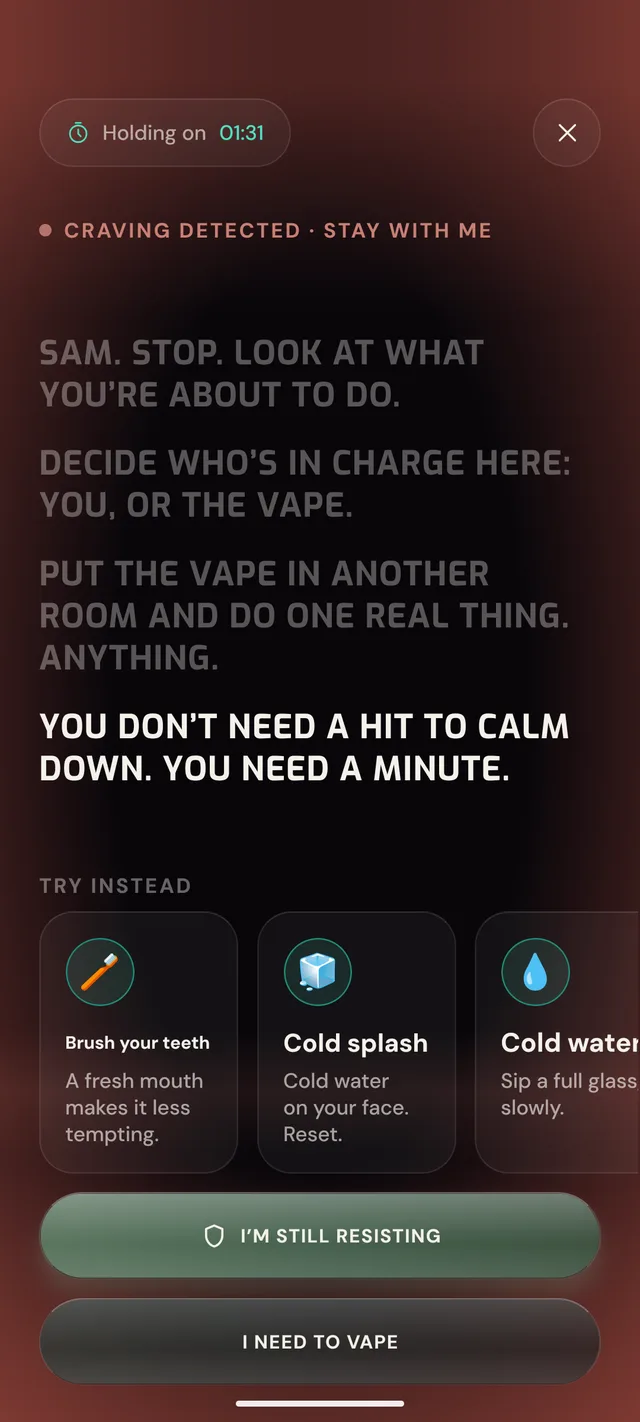
This is the moment we built Unvapd for. Unvapd, the app we built to help people quit vaping, has a Panic Button for exactly these minutes: one tap opens personal messages that remind you why you're quitting, ideas to try instead, and breathing, until the craving passes.
Step 8: Get through the first two weeks
The first two weeks are the hardest part, so make them easy on yourself. Sleep more if you can. Eat regular meals. Cut back on alcohol, which weakens your resolve. Avoid situations where you'd usually vape, at least for now. And count every day: seeing your vape-free days and the money you've kept add up is real motivation.

Step 9: If you slip, restart fast
A slip is not a failure, and it doesn't wipe out the days you've already won. Most people who quit for good had a few slips first. What matters is what you do next: work out what triggered it, adjust your plan, and start again today, not "on Monday". Read what to do after a vaping relapse.
Step 10: Get help if you need it
You don't have to do this alone. Free stop-smoking services can help with vaping too, and a doctor or pharmacist can talk you through options like nicotine replacement. Support from friends, a quit line or an app all make a real difference.
Sources and further help
This article is general information, not medical advice. If you have health concerns, or want help with withdrawal or stop-smoking medicines, talk to a doctor, pharmacist or a local stop-smoking service.
Questions people ask
What is the best way to quit vaping?
There isn't one best way for everyone. Most people succeed with a plan: a quit day, a way to handle cravings and triggers, and support. Some stop cold turkey, others step down their nicotine first or use nicotine replacement with advice from a pharmacist.
How long does it take to quit vaping?
Physical withdrawal usually eases over two to four weeks. Cravings tied to habits and triggers can show up for longer, but they get weaker and less frequent the longer you stay vape-free.
Is it hard to quit vaping?
It can be, because nicotine is addictive and vaping is easy to do all day. But many people quit, especially with a plan for cravings and someone or something to support them.
Photos: rawpixel, public domain (CC0).